Baila: A Handwritten Font That Brings Personality to Your Projects
There’s a certain magic in a font that feels both personal and polished. In a world saturated with digital precision, a typeface with human touch can cut through the noise and make a real connection. That’s exactly what Baila offers. It’s a lovely and timeless handwritten font, but more than that, it’s a versatile creative asset. The best choice for eye-catching logos, branding, and quotes? Absolutely. But its utility extends far beyond that. Every letter has a unique and beautiful touch, designed not just to be seen, but to make your design come alive with warmth and character.
The Visual Character of Baila: More Than Just Script
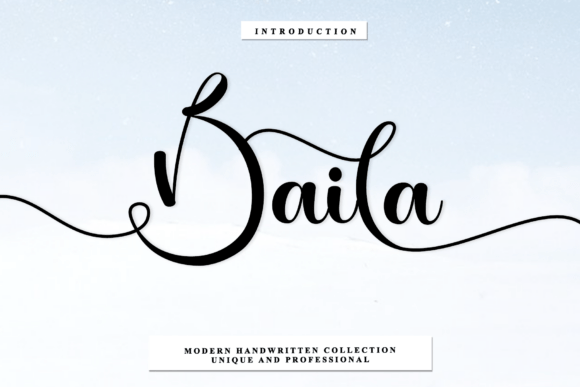
At first glance, Baila presents itself as a flowing script font, but its personality is more nuanced. It avoids the overly casual or chaotic look of some handwritten styles, striking a balance between relaxed elegance and clear legibility. The letterforms feature gentle, natural variations in stroke weight, mimicking the slight inconsistencies of actual handwriting. You’ll notice smooth connections between certain letters and deliberate breaks in others, creating a rhythm that feels organic rather than mechanically connected.
This careful construction gives Baila a dual nature. It possesses the approachable, personal feel of a handwritten font while maintaining the refined structure needed for professional applications. The curves are soft, the endings are tapered, and the overall impression is one of friendly sophistication. It’s a creative font that doesn’t sacrifice readability for style, making it a practical choice for designers who need flair without compromising function.
Where Baila Truly Shines: From Brand Identity to Social Media
Understanding a font’s strengths is key to using it effectively. Baila’s blend of personality and clarity makes it exceptionally adaptable across a wide range of projects. It’s not just a display font for headlines; it can be a cornerstone of a cohesive visual language.
For Branding and Logo Design: A logo design needs to be memorable and convey a brand’s essence instantly. Baila excels here. It can lend a boutique, artisanal, or heartfelt quality to a brand identity. Think of a local bakery, a handmade jewelry line, a wedding planner, or a lifestyle coach. The font communicates care, creativity, and a personal touch. Used as the primary wordmark or as a complementary script element alongside a clean sans serif font, it helps build a brand identity that feels authentic and engaging.
For Marketing and Social Media: In the fast-scrolling environment of social media, a social media graphic needs to grab attention. Baila’s distinctive style makes quotes, call-to-action phrases, and promotional text stand out. It’s perfect for Instagram stories, Facebook ads, Pinterest pins, and email headers where a human touch can increase engagement. The font’s personality helps content feel less like an advertisement and more like a note from a friend.
For Editorial and Publishing: While a full-length novel might call for a traditional serif font, Baila finds its niche in editorial design. It’s ideal for pull quotes, chapter headings, magazine sidebars, and blog post titles. In a cookbook, it can annotate recipes with a personal flair. In a memoir or poetry collection, it adds intimate tone to section dividers. Its use should be strategic—accenting a layout, not overwhelming it—to maintain professional readability.
For Packaging and Physical Products: The font’s tactile quality translates beautifully to print. Packaging design for gourmet foods, cosmetics, stationery, or artisanal goods benefits from Baila’s elegant yet accessible vibe. It can elevate the perceived value of a product, suggesting craftsmanship and attention to detail. On a label, a box, or a tag, it communicates the story behind the product.
Practical Guidance for Using Baila in Your Work
Choosing the right font is only half the battle; using it well is what separates good design from great. Here’s how to approach integrating Baila into your projects effectively.
Evaluate the Project Fit: First, consider your audience and the message. Baila is a premium font that suits projects aiming for a friendly, creative, or elegant tone. It might not be the best fit for a corporate financial report or a technical manual, where clarity and neutrality are paramount. For a children’s birthday party invitation, a yoga studio’s branding, or a freelance photographer’s portfolio, it’s an excellent match.
Master the Art of Font Pairing: Rarely does a single font work alone. Font pairing is crucial for creating visual hierarchy. Baila, as a script font, pairs exceptionally well with simple, geometric sans serif fonts (like Montserrat, Lato, or Open Sans) or classic serif fonts (like Lora or Merriweather). Use Baila for headlines or key phrases to draw the eye, and pair it with a highly legible companion font for body text. This creates contrast and ensures your design is both beautiful and functional.
Test for Readability and Hierarchy: Always test your layouts at various sizes. What looks stunning as a large header might become a blurred line in a small caption. Check letter spacing, especially if using Baila for all-caps text (though it’s primarily designed for lowercase and mixed-case use). Ensure there is enough contrast between the text and background. Good modern typography is about guiding the reader’s eye effortlessly, and Baila can be a powerful tool for that when used thoughtfully.
Review the Included Styles and Licensing: Before purchasing or downloading any commercial font, always check the license. Ensure it covers your intended use—whether for personal projects, client work, or commercial products like merchandise. A quality design asset like Baila will often come with multiple styles, such as regular, bold, or italic, offering more flexibility for your projects.
In the end, a font is a tool for communication. Baila is a tool that speaks with a distinct, human voice. It doesn’t just display words; it infuses them with feeling. By understanding its character and applying it with intention, you can create designs that resonate more deeply, build stronger brand recognition, and engage your audience on a more personal level. It’s a valuable addition to any designer’s toolkit, ready to bring your next project to life.