Sweet Cucumber Mocktail: A Handwritten Font with Bold Summer Spirit
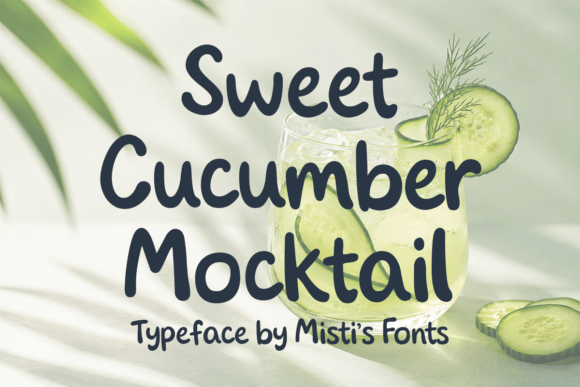
There's a particular energy in handwritten fonts that try too hard to be casual. Sweet Cucumber Mocktail sidesteps this entirely. It arrives with a confident, bold stroke that feels genuinely playful—not contrived. This isn't a whispering script font; it's a friendly declaration. The letterforms carry a distinct weight, yet they maintain an adorable, sweet character that makes them immediately approachable. It's the typographic equivalent of a bright smile paired with a firm handshake.
Visual Character and Personality
At first glance, Sweet Cucumber Mocktail presents as a bold handwritten font with a rounded, organic quality. The strokes are consistent and robust, avoiding the thin, delicate lines common in many script fonts. This gives it excellent presence, especially at larger sizes. The letter connections feel natural, mimicking the flow of real handwriting without becoming illegible. You'll notice subtle variations in baseline and letter height—enough to feel human, but controlled enough for professional use.
The overall personality is one of joyful expressiveness. It doesn't take itself too seriously, making it ideal for projects that need to communicate warmth, creativity, and approachability. Think of it as the font equivalent of a summer garden party: relaxed, colorful, and full of character. Its whimsicality is balanced by that underlying boldness, preventing it from feeling fragile or overly saccharine.
Where This Font Truly Shines
As a premium font designed for impact, Sweet Cucumber Mocktail finds its strongest applications in contexts where personality needs to lead. For logo design, particularly for brands targeting a younger or lifestyle-oriented audience, it offers instant recognition. Imagine a boutique bakery, a floral studio, or a children's clothing line using this as their primary typeface. The boldness ensures legibility even in small sizes, while the handwritten style injects immediate charm.
In packaging design, it can make products jump off the shelf. Use it for product names, taglines, or call-outs on labels for artisanal foods, cosmetics, or craft beverages. The "mocktail" in its name isn't accidental—it pairs beautifully with vibrant color palettes and illustrative elements.
For digital projects, consider it for website headers, blog post titles, or standout social media graphics. On platforms like Instagram or Pinterest, where visual noise is high, a bold, friendly font cuts through the clutter. It's particularly effective for quotes, promotional announcements, or personal branding elements.
Print and Editorial Applications
Don't overlook its potential in editorial design. While it wouldn't work for body text, it's excellent for magazine pull quotes, feature story headers, or cookbook chapter titles. For event materials—think wedding invitations, party flyers, or workshop announcements—it brings a handmade feel that feels personal yet polished. The key is using it as an accent, not the workhorse. Pair it with a clean sans serif font for body copy to maintain readability and create visual hierarchy.
Making Smart Design Choices
Choosing a creative font like Sweet Cucumber Mocktail requires thoughtful evaluation. First, consider your audience. This font speaks to adults 20–50 who appreciate design with personality—entrepreneurs, crafters, and content creators who want their work to feel authentic and engaging. It's less suited for corporate law firms or financial institutions, but perfect for brands built on creativity and connection.
When testing font pairing, contrast is your friend. The bold, organic nature of Sweet Cucumber Mocktail works well alongside geometric sans serif fonts (like Montserrat or Poppins) or a simple, elegant serif font (like Lora or Merriweather). Avoid pairing it with other decorative or script fonts, which can create visual competition and confusion.
Always test readability in context. While the font is well-crafted, handwritten styles can challenge legibility at very small sizes or in long paragraphs. Use it for headlines, short phrases, or single words. Check how it renders on different screens and in print proofs. The included glyphs and alternates—common in quality handwritten fonts—can help you fine-tune connections and avoid repetitive letter shapes.
For commercial use, verify the licensing. Most premium fonts offer clear terms for both personal and commercial projects, but it's worth confirming. Investing in a properly licensed commercial font supports the creators and ensures you're covered for client work, merchandise, or wide distribution.
Building a Cohesive Brand Identity
A font isn't just a visual element; it's a communication tool. Sweet Cucumber Mocktail can become a cornerstone of a brand identity for businesses that want to project creativity, approachability, and a touch of playfulness. Used consistently across touchpoints—from website headers to business cards to packaging—it builds recognition. The boldness ensures it remains memorable, while the handwritten style keeps the brand feeling human and relatable.
For marketers and bloggers, it offers a way to differentiate content. A consistent typographic style across blog graphics, email headers, and social media posts creates a visual signature that audiences come to recognize. This consistency builds professionalism and trust, even within a playful aesthetic.
Ultimately, Sweet Cucumber Mocktail is a design asset that serves a specific purpose: to inject bold, joyful personality into projects. It's not a font for every situation, but where it fits, it works exceptionally well. It understands its role—it's the accent piece, the headline maker, the element that adds a spark of summer spirit to your designs. Use it wisely, pair it thoughtfully, and it will help your work stand out with authentic, bold charm.